
The Role of Language in International Contexts
Seminar at Roma Tre University


The Event
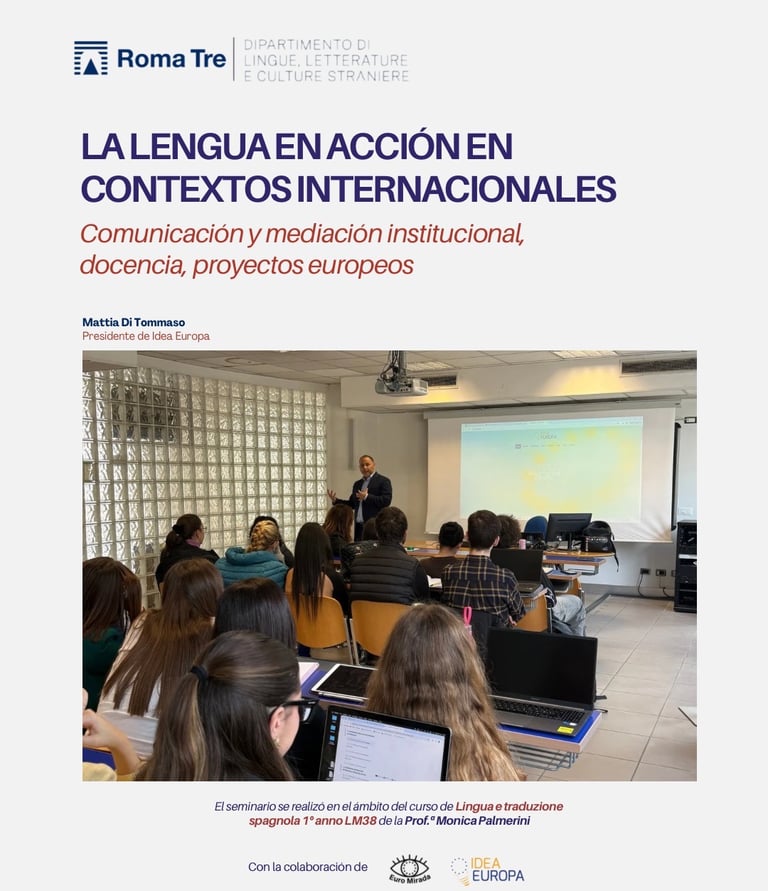
On 21 November Roma Tre University hosted the seminar “La lengua en acción en contextos internacionales: comunicación y mediación institucional, docencia, proyectos europeos” for students enrolled in the Master’s programme in Modern Languages for International Communication (LM38). The session formed part of the course in Spanish language and translation coordinated by Prof. Monica Palmerini.
Gallery
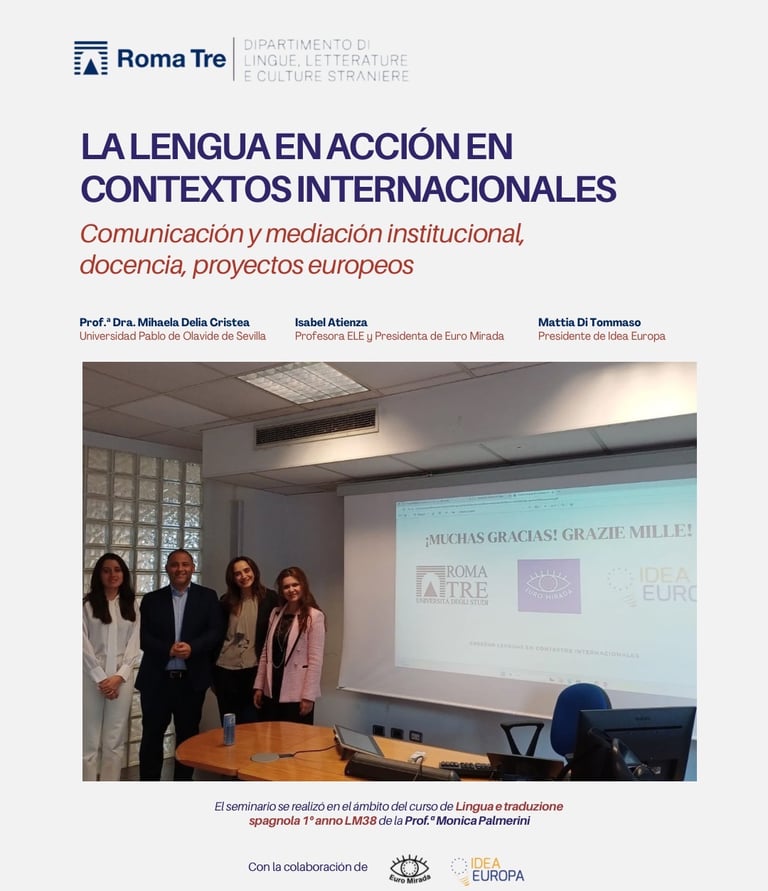
Moments from the Roma Tre seminar on language
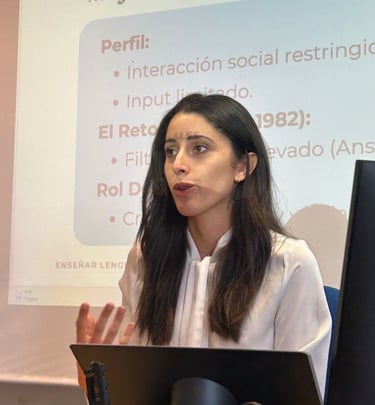
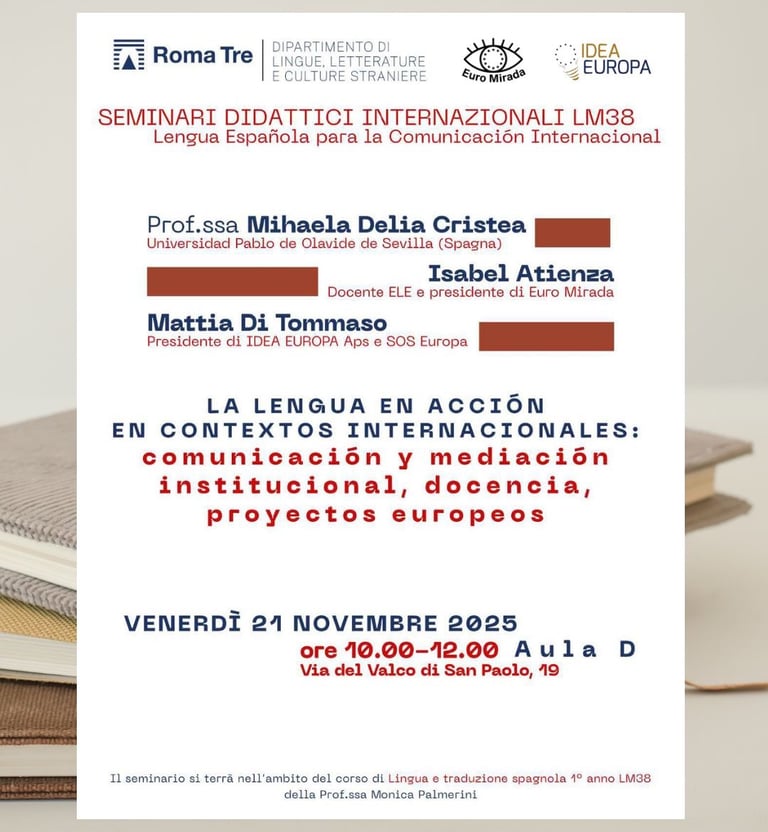
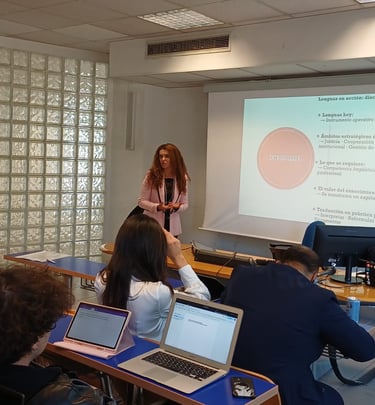
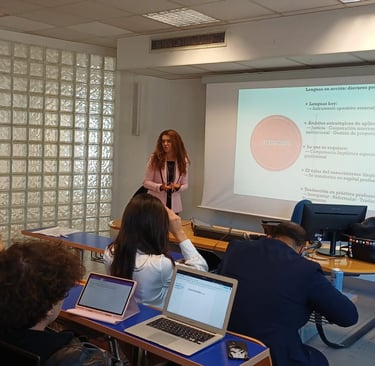
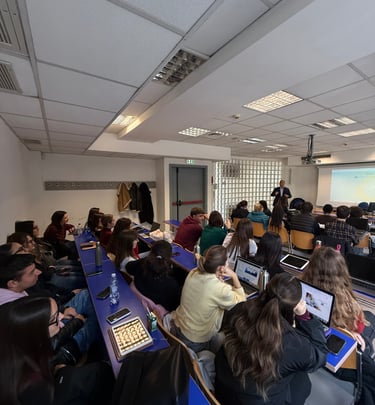
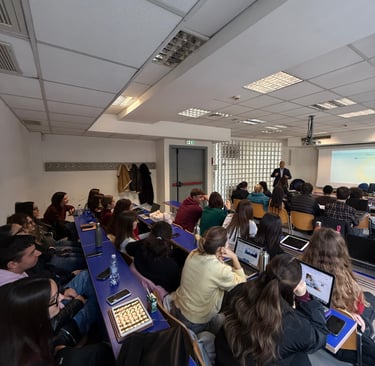
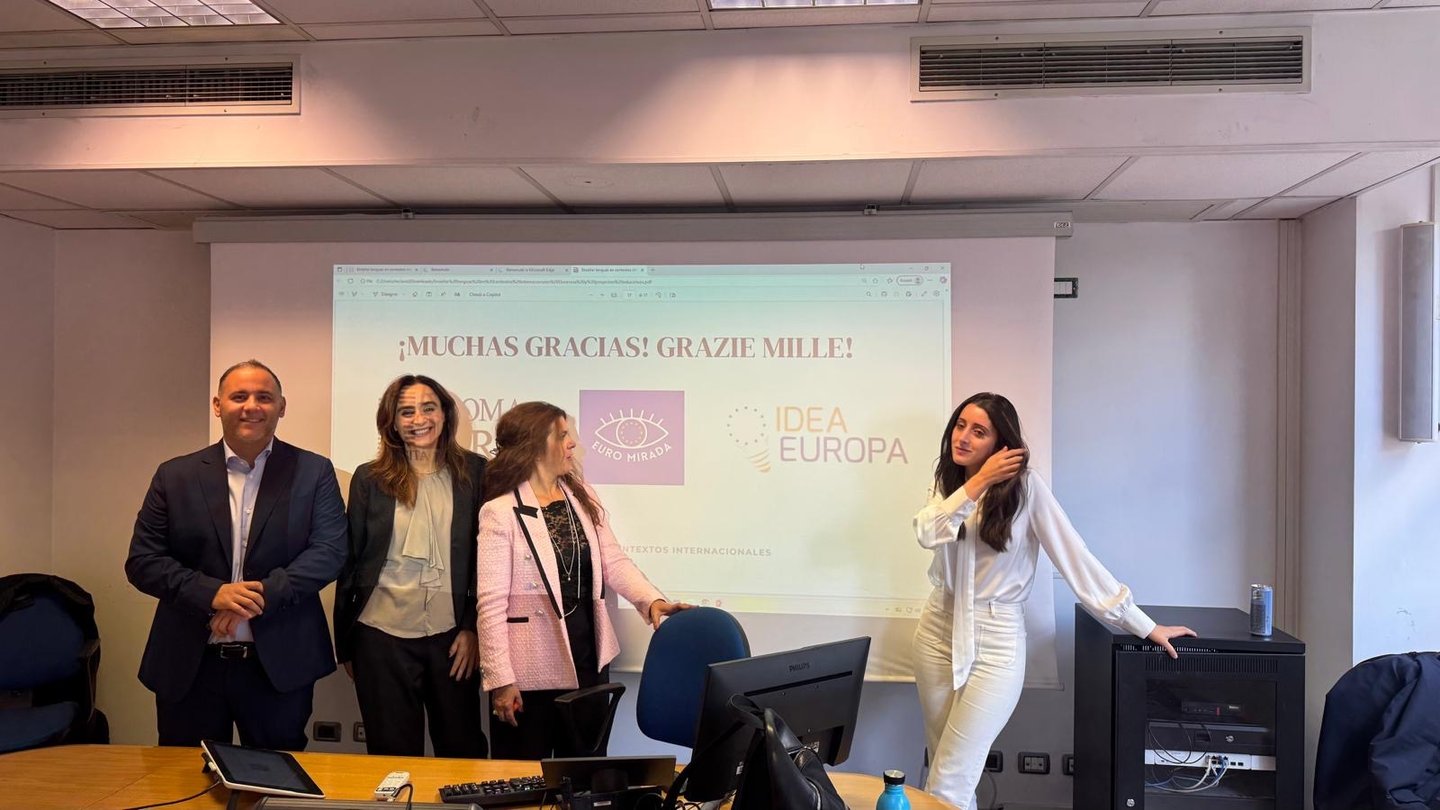
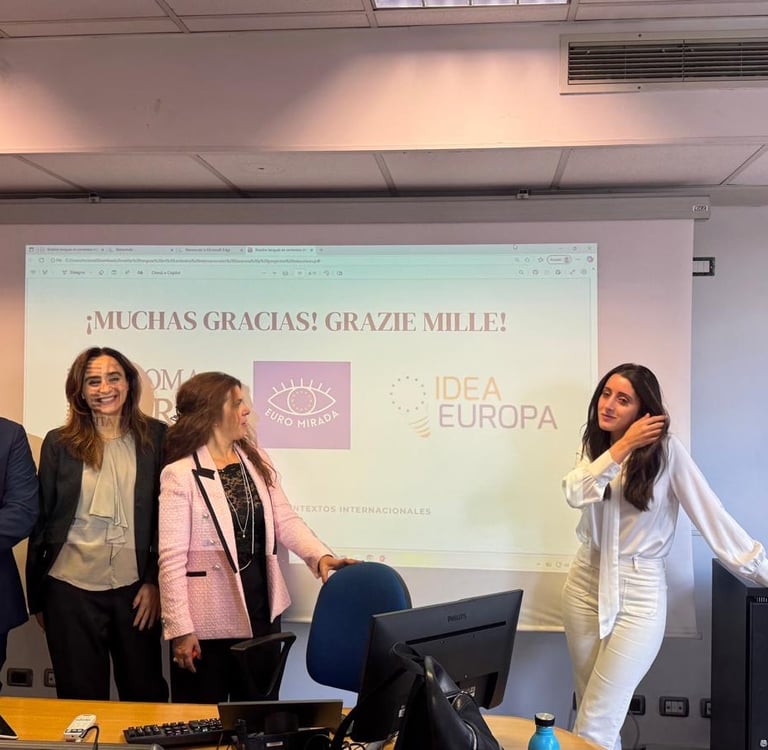
The seminar brought together three of our long-standing collaborators: Prof.ª Dr.ª Mihaela Delia Cristea from the University Pablo de Olavide in Seville, Mattia Di Tommaso representing IDEA EUROPA and Isabel Atienza, president of Euro Mirada. Seeing these partners working side by side in the same classroom offered a clear reminder of what cooperation means in our field. Much of our work depends on turning theoretical knowledge into concrete opportunities, and that transition is only possible when different organisations contribute their own expertise and experience.
This seminar provided students with a direct view of how language functions beyond the academic setting. Through practical examples and reflections drawn from university teaching, institutional communication and the management of European projects, the speakers showed how linguistic competence becomes a tool for negotiation, clarity and intercultural understanding. The discussion moved across the realities of academic collaboration, the responsibilities involved in institutional mediation and the strategic role of multilingual communication in international partnerships.
By observing these perspectives in one shared space students could connect the skills they develop in class with the tasks professionals face when working across borders. They also gained insight into the value of precision, adaptability and cultural awareness when operating in multilingual environments.
For us partnership means a continued exchange of responsibilities and knowledge. Each organisation brings its own vision and methods, and this diversity helps create a more complete and realistic understanding of how international communication operates today. Moments like this make that collaboration visible and reinforce the idea that learning becomes more relevant when shaped by multiple voices.
We extend our sincere thanks to Prof. Monica Palmerini and Università degli Studi Roma Tre for opening this space, and to our partners for embodying the spirit of shared work that sustains our projects. It is encouraging to see how these connections deepen over time and how language emerges not only as a subject of study but as a practical tool for cooperation and collective growth.